

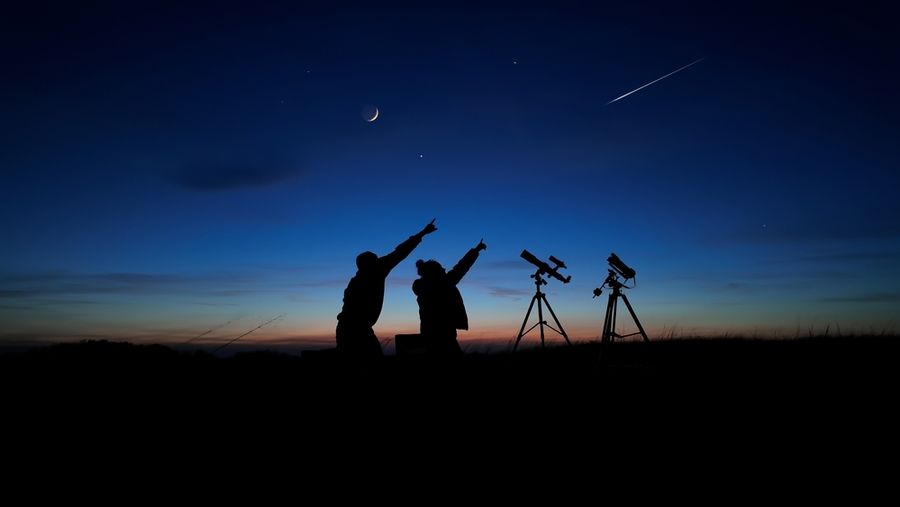
On clear nights, your backyard can offer a front-row seat to one of nature’s most captivating shows. Stars, planets, constellations, and passing satellites are often visible without expensive equipment or advanced knowledge. All you need is a comfortable spot, a little patience, and enough curiosity to look upward. Stargazing provides a peaceful break from daily routines while opening the door to fascinating discoveries. Even familiar surroundings can feel entirely different beneath a sky filled with distant points of light.
Choose the Best Time and Place
Clear, cloudless evenings provide the best conditions for backyard stargazing. Check the weather forecast before setting up, paying attention to cloud cover, humidity, and possible storms. The phase of the moon matters as well. A bright full moon can wash out faint stars, while nights around a new moon usually reveal more celestial objects. However, the moon itself is a fascinating target when it’s visible.
Choose the darkest area available in your yard. Move away from porch lights, streetlights, and illuminated windows whenever possible. Trees, fences, or buildings can help block nearby light, though they may also limit your view. An open area with a clear view toward several directions will let you follow more objects across the sky.
Gather a Few Stargazing Essentials
You don’t need a telescope to begin exploring the night sky. Your eyes can spot the moon, bright planets, meteor showers, constellations, and satellites. However, a few practical supplies will make each backyard session more comfortable and enjoyable.
Consider gathering:
- A reclining chair or outdoor blanket
- Warm clothing and an extra blanket
- A red flashlight to preserve night vision
- Binoculars for closer views
- A printed star chart or astronomy app
- Water and a light snack
- A notebook and pencil for observations
Keep everything in a small bag or basket, so it’s ready whenever the sky clears. Binoculars are especially helpful for beginners because they’re portable, affordable, and easy to use. They can reveal lunar craters, star clusters, and details hidden from unaided eyes.
Give Your Eyes Time to Adjust
Your eyes need time to adapt after leaving a brightly lit room. Allow about 20 to 30 minutes for your night vision to improve. During that period, faint stars will gradually appear, and familiar constellations may gain surprising detail. Looking at a phone screen or switching on a bright flashlight can interrupt the adjustment, forcing your eyes to start the process again.
Use a flashlight with a red setting when you need to check a chart or find an item. Red light has less effect on night vision than white light. If your flashlight doesn’t offer a red mode, cover its lens with red cellophane. Lowering your phone’s brightness and activating a red-screen feature can also help, though putting the device away creates a calmer experience.
Learn a Few Easy Sky Landmarks
Start with celestial landmarks that are bright and relatively easy to identify. The moon is an obvious choice, but its appearance changes throughout the month. Notice the shifting line between light and shadow, where craters and mountains often look especially defined. Bright planets can also stand out because they usually shine steadily, while stars tend to twinkle more noticeably.
Constellations offer helpful reference points for navigating the sky. Depending on your location and the season, you might begin with the Big Dipper, Orion, Cassiopeia, or Scorpius. Learn one recognizable pattern at a time, then use it to locate nearby stars and constellations. Trying to memorize the entire sky at once can feel overwhelming. A few dependable landmarks will gradually make the night sky feel familiar and organized.
Use Binoculars Before Buying a Telescope
A telescope can provide remarkable views, but it also requires setup, adjustment, and practice. Binoculars offer a simpler introduction. Look for a pair that’s comfortable to hold and not overly heavy. Common models, such as 7x50 or 10x50 binoculars, gather enough light to reveal objects that aren’t visible with unaided eyes while still providing a fairly wide field of view.
Begin by studying the moon’s surface, especially along the boundary between its bright and dark regions. You can also search for open star clusters, including the Pleiades, or scan the Milky Way from a dark location. Rest your elbows on a table or use a tripod adapter to steady the image. Learning what interests you most can help you choose a suitable telescope later.
Keep a Record of What You See
A stargazing journal turns casual observations into an ongoing personal project. Record the date, time, weather, moon phase, and viewing location at the beginning of each entry. Write down any planets, constellations, meteors, satellites, or unusual objects you notice. You can also sketch the moon or map a group of stars without worrying about artistic perfection.
Over time, your notes will reveal how the sky changes with the seasons. Constellations that dominate winter evenings may disappear by summer, while planets shift position against the background stars. Journaling also encourages slower, more careful observation. Questions will naturally arise as you compare entries, giving you new subjects to explore. Even a short record of one memorable object can preserve the excitement of a successful night outside.
Let Curiosity Lead the Way
Backyard stargazing doesn’t have to follow a strict schedule or involve identifying every light overhead. Some evenings may be devoted to finding constellations, while others might simply offer time to watch the moon rise. Clouds, neighborhood lighting, and seasonal weather will occasionally limit what you can see, but every clear night presents another opportunity.
As your confidence grows, you may decide to follow meteor shower calendars, visit darker viewing locations, or invest in a beginner telescope. You might also invite friends or family members to join you. Shared discoveries can make an ordinary evening feel special, especially when someone spots a satellite or recognizes a constellation for the first time. Keep looking up, asking questions, and enjoying the quiet wonder waiting just beyond your back door.